Two-Post vs. Four-Post Car Lifts: 7 Powerful Insights That Matter
Release time:2025-08-08
Prepared for: Architects, Urban Planners, and Parking Design Professionals
Purpose: To provide a comprehensive evaluation of two-post versus four-post car stackers, focusing on structural design, mechanical systems, parking usability, regional adoption, and return on investment (ROI). This report aims to inform architectural integration and urban planning decisions in multi-modal parking solutions.
Course Outline
Introduction
As urban centers face increasing parking space scarcity, vertical parking solutions such as two-post and four-post car stackers have emerged as critical infrastructure components. These mechanical lifts extend parking capacity vertically without significant horizontal expansion, offering architects and planners adaptable options for dense environments. Beyond space optimization, these systems influence building design, operational efficiency, and lifecycle costs.
This report explores these systems through a multi-dimensional lens, incorporating technical research and market insights, to provide professionals with a data-driven foundation for specifying appropriate car stackers tailored to diverse project needs.
Structural and Mechanical Systems
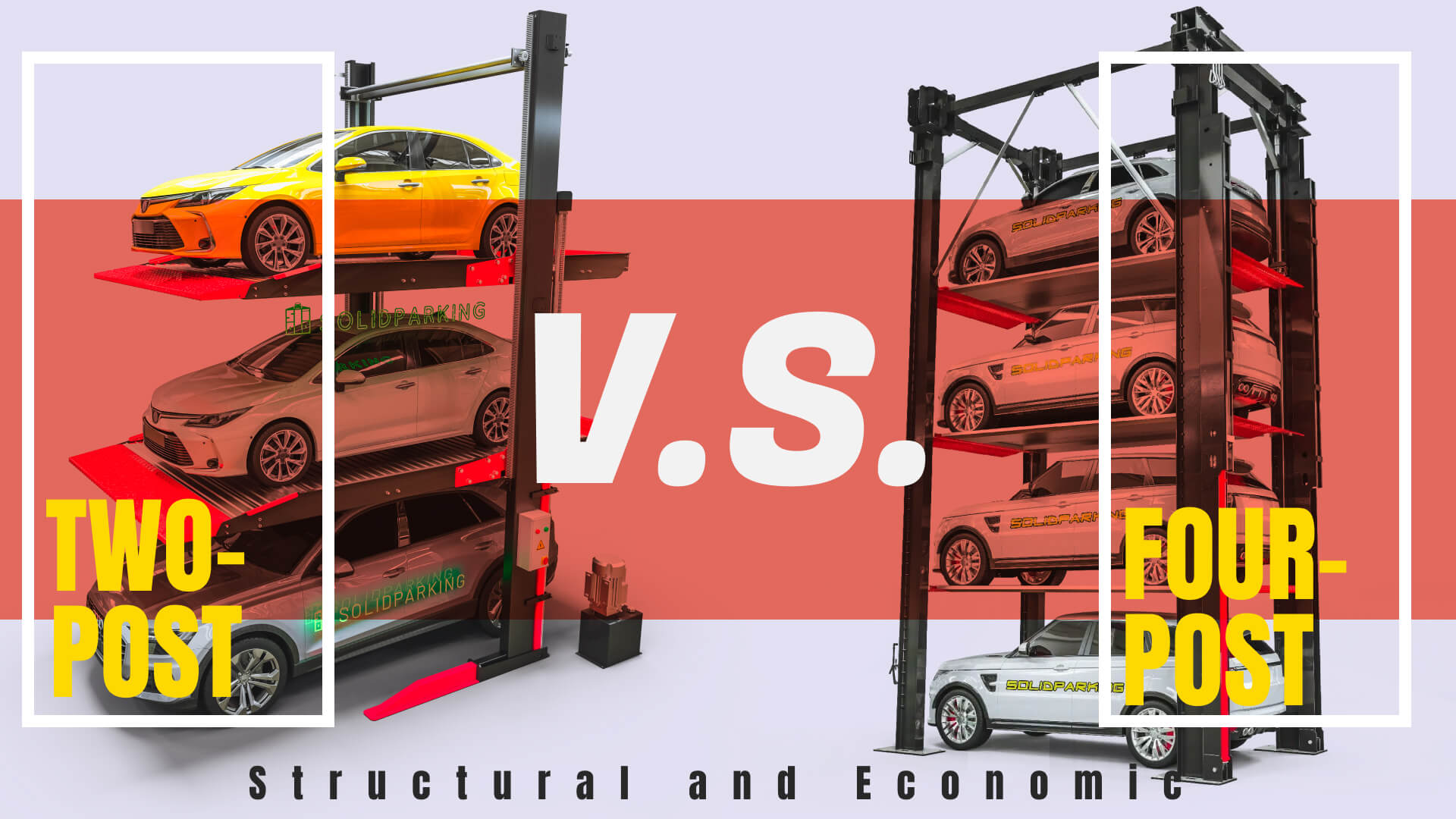
The core difference between two-post and four-post stackers lies in their post configuration and lifting mechanisms, which significantly impact stability, load capacity, and installation requirements.
Feature
Two-Post Car Stacker
Four-Post Car Stacker
Lifting Mechanism
Hydraulic Cylinder with Chain Drive
Hydraulic Cylinder with Steel Wire Rope
Number of Posts
2 Vertical Posts
4 Vertical Posts
Platform Support
Suspended (embossed metal plate)
Wheel-supported Runway Plates
Load Capacity
2000–3200 kg
3000–5000 kg
Installation Precision
High — requires exact post alignment
More tolerant due to four-point support
Maintenance Needs
Regular lubrication and tension adjustment of chains
Periodic inspection of steel wire ropes
Explanation
Two-post stackers utilize hydraulic cylinders paired with chains to raise the platform, requiring precise installation to maintain balance and safety. Their suspended platform design, often featuring embossed galvanized steel plates, optimizes space but demands more attentive maintenance. Four-post stackers, by contrast, employ steel wire ropes, which provide elasticity and enhanced load distribution across four vertical posts and a runway platform supporting vehicle wheels. This configuration offers greater lateral stability, accommodating heavier vehicles and frequent use in commercial environments.
High – accommodates oil drip trays and hydraulic jacks
Outdoor Suitability
Excellent with hot-dip galvanization
Good with epoxy zinc coating; iron drip trays available
Two-Post Platform: Embossed Plate
Four-Post Platform: Runway Plate
Explanation
Two-post platforms, typically called embossed plates, feature raised patterns created by a cold embossing process. This design enhances tire grip and safety, especially important for wet or slippery surfaces. Historically, corrugated (“waving”) steel plates were used but have largely been replaced due to durability and slip-resistance considerations. Four-post platforms use perforated runway plates with a hollow center that allows for drainage and placement of service equipment such as oil drip trays or hydraulic jacks, making them preferable in automotive service environments. The use of hot-dip galvanization for two-post systems enhances corrosion resistance, particularly critical for outdoor installations.
Safety Mechanisms and Compliance
Both stacker types incorporate multi-layered safety features to comply with international standards.
Safety Feature
Two-Post Stackers
Four-Post Stackers
Dual Safety Locking
Mechanical & Hydraulic
Mechanical & Hydraulic
Emergency Stop Mechanism
Yes
Yes
Overload Protection
Yes
Yes
Lock Release
Standard
Optional
Remote Control
Optional
Optional
Explanation
Safety is paramount, especially in automated or semi-automated parking systems. Both two-post and four-post car stackers are designed to meet ANSI/ALI ALCTV and ISO mechanical lift safety standards, incorporating dual mechanical and hydraulic locking systems to prevent accidental descent. Emergency stops and overload protections further safeguard users.
User Experience and Parking Efficiency
User interface and parking ergonomics differ notably between two-post and four-post stackers.
Aspect
Two-Post System
Four-Post System
Vehicle Access
Unobstructed front access
Posts at vehicle sides may obstruct
Parking Maneuvering
Easier, better visibility
Slightly more complex due to posts
Noise & Vibration
Moderate noise from chains
Generally quieter operation
Suitability for Outdoor Use
Superior with hot-dip galvanized coating
Good with epoxy coatings
Explanation
Two-post systems offer an unobstructed driving path as the vehicle is lifted by side arms, improving the driver’s approach and reducing the risk of collision with structural elements. However, this design requires careful spatial planning. Four-post lifts support vehicles on runways that allow easy parking but include four vertical posts that can slightly hinder maneuverability, especially in tight spaces. Noise considerations and durability factors also guide selection based on indoor versus outdoor use.
Global Market Adoption and Use Cases
Region
Preferred Stackers
Typical Applications
North America
Four-Post
Automotive repair shops, storage facilities
Europe
Two-Post
Urban parking, valet systems
Southeast Asia
Two-Post
Residential complexes, compact lots
Middle East
Both
Luxury parking, mixed-use developments
Australia/New Zealand
Four-Post
Home garages, commercial parking
China & Korea
Mixed
Service centers (4-post), residential (2-post)
Explanation
Regional preferences reflect urban density, vehicle fleet characteristics, and economic priorities. North American markets favor four-post lifts due to their suitability for heavy-duty use and service integration. European and Asian urban environments prioritize two-post lifts for space efficiency and cost-effectiveness. The Middle East integrates both types based on luxury and service needs. This global diversity necessitates tailored architectural specifications considering local market trends.
Economic Impact and ROI Analysis
Parameter
Two-Post Car Stackers
Four-Post Car Stackers
Initial Investment
Optimized cantilevered design and chain-driven mechanics deliver high performance at a cost-effective price point.
Lower upfront cost due to simpler structure and installation
Operational Efficiency
High space utilization
Enhanced service revenue potential
Maintenance Costs
Moderate (chain tension, lubrication)
Moderate to high (wire ropes inspection)
Typical Payback Period
6–18 months
12–36 months
Revenue Streams
Increased parking capacity
Parking + service facility income
Explanation
Two-post stackers often offer high space efficiency and are favored for their compact design, especially in projects focused on valet, residential, or mixed-use parking. However, four-post stackers typically come at a lower initial cost and simpler installation, making them a more economical choice for many businesses—particularly automotive service providers and residential garages. Their ability to double as both parking and maintenance platforms adds functional value. ROI ultimately depends on the intended use case, maintenance environment, and revenue strategy. Choosing the right system aligned with long-term operational goals is key to maximizing investment returns.
From Blueprints to Reality
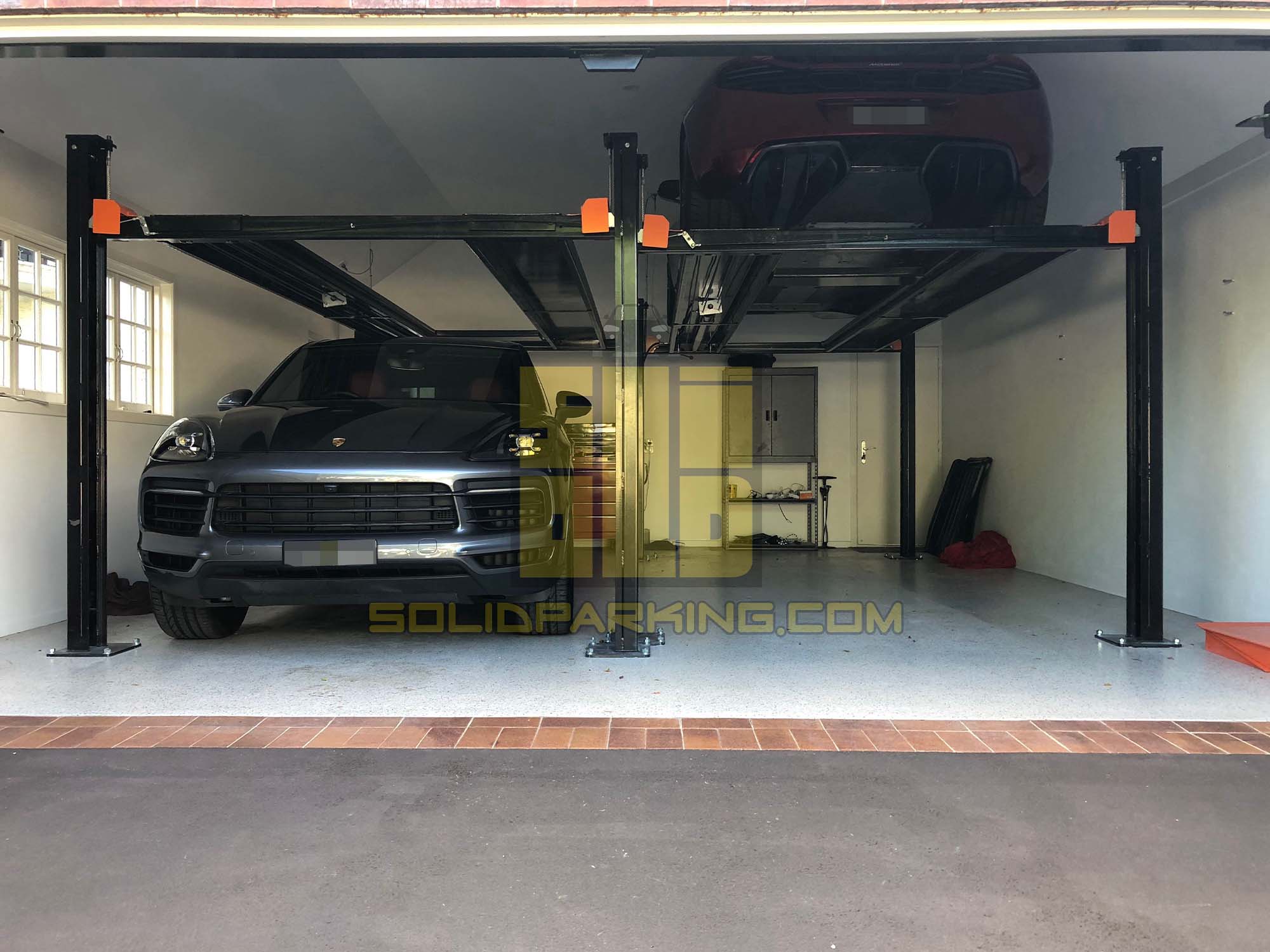
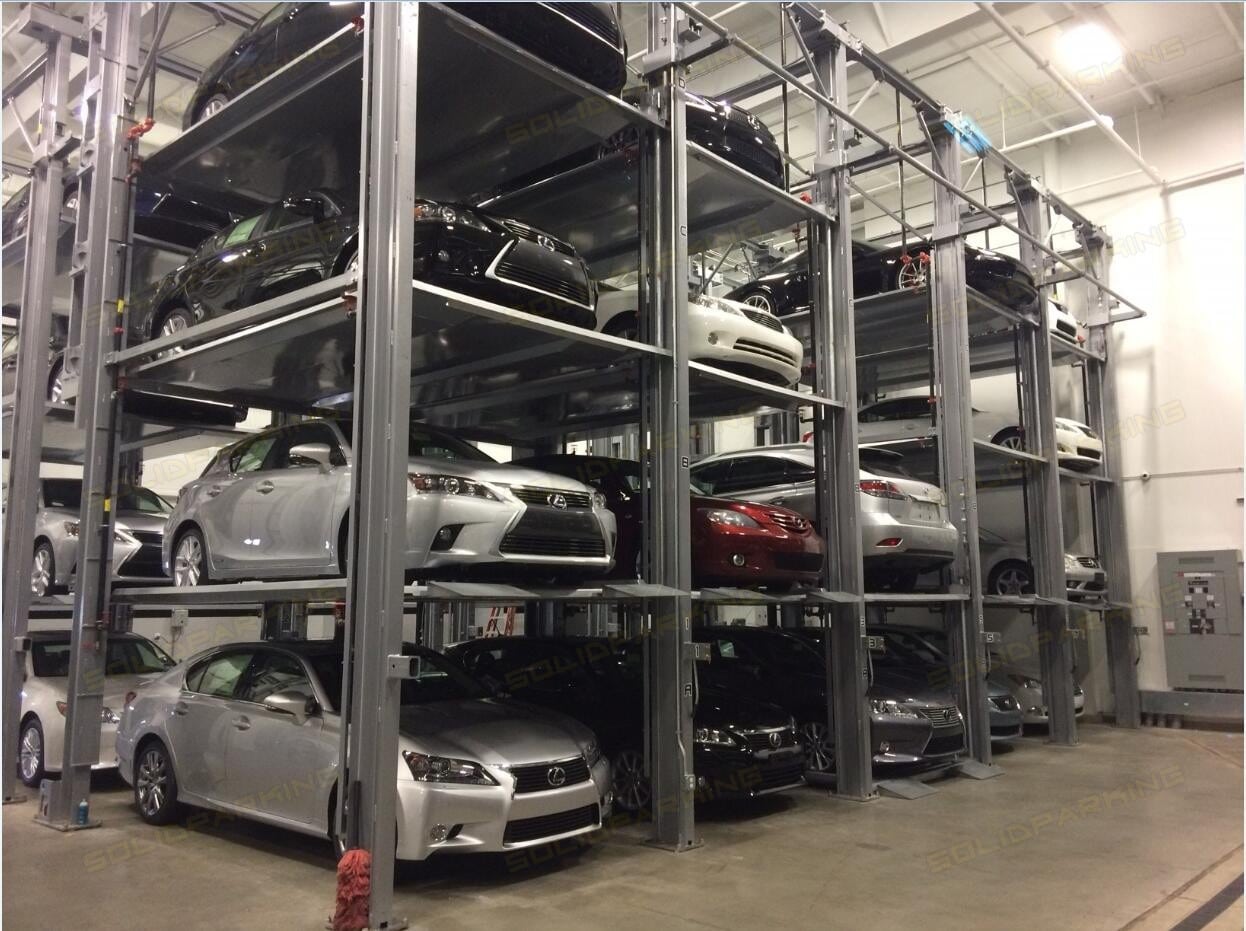
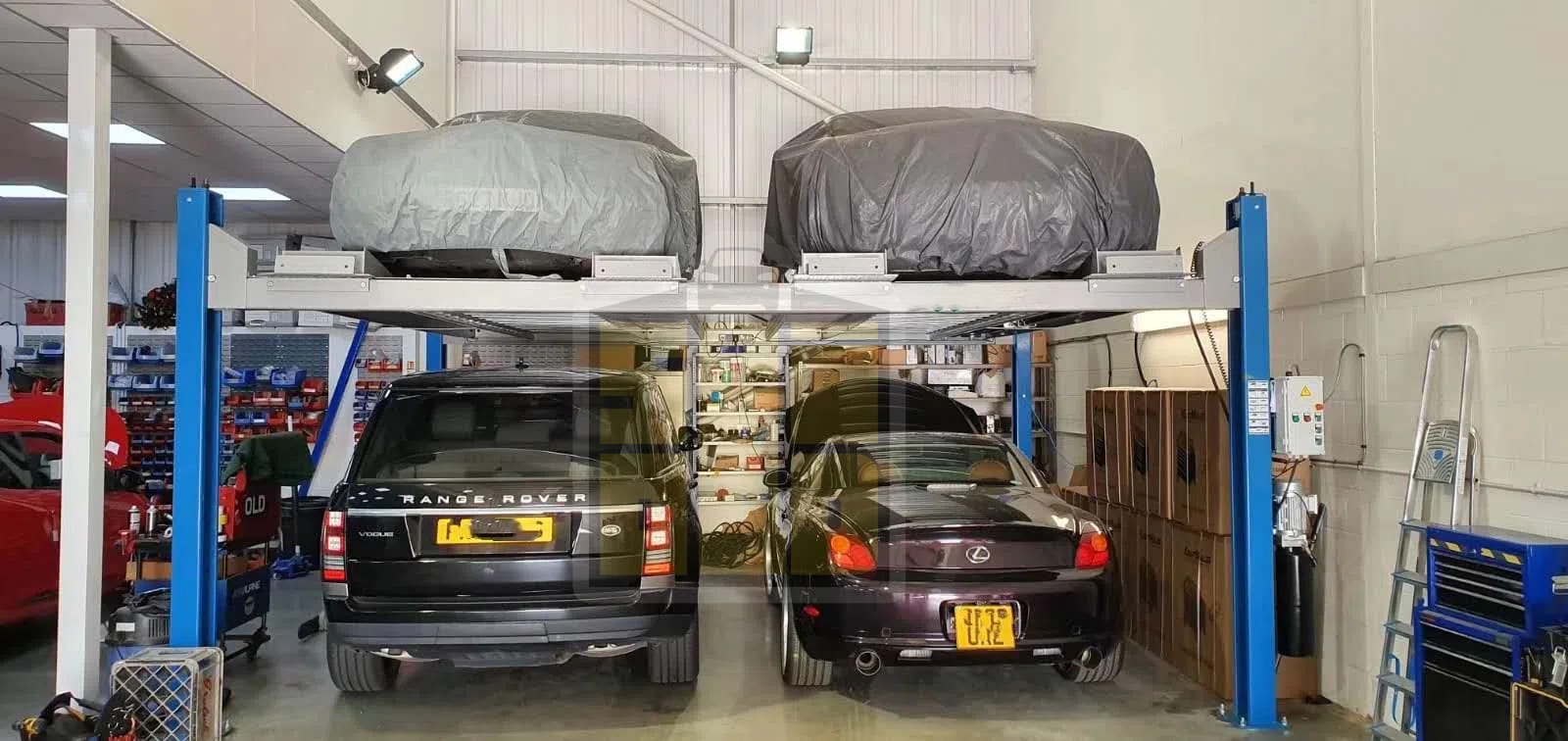
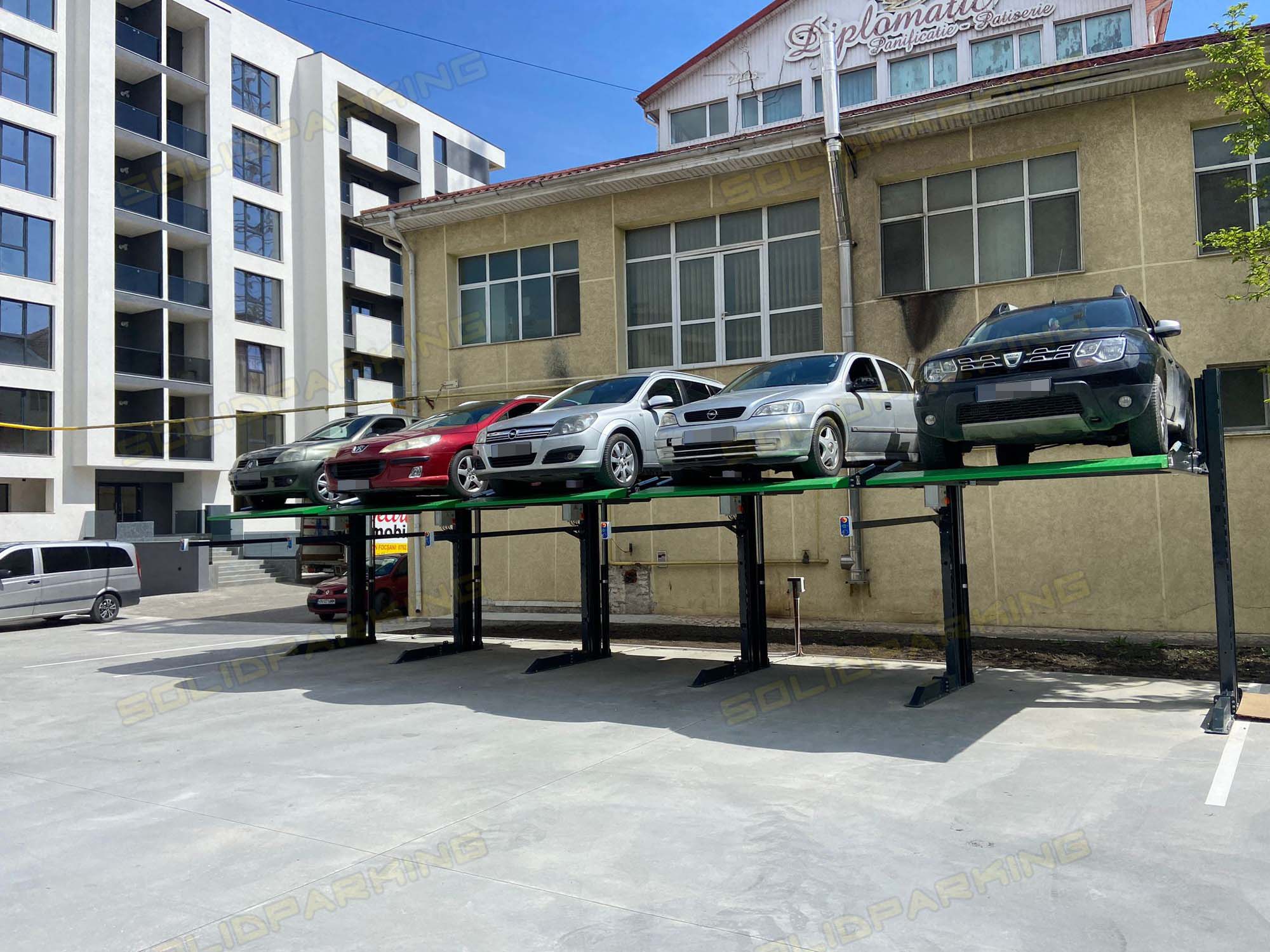
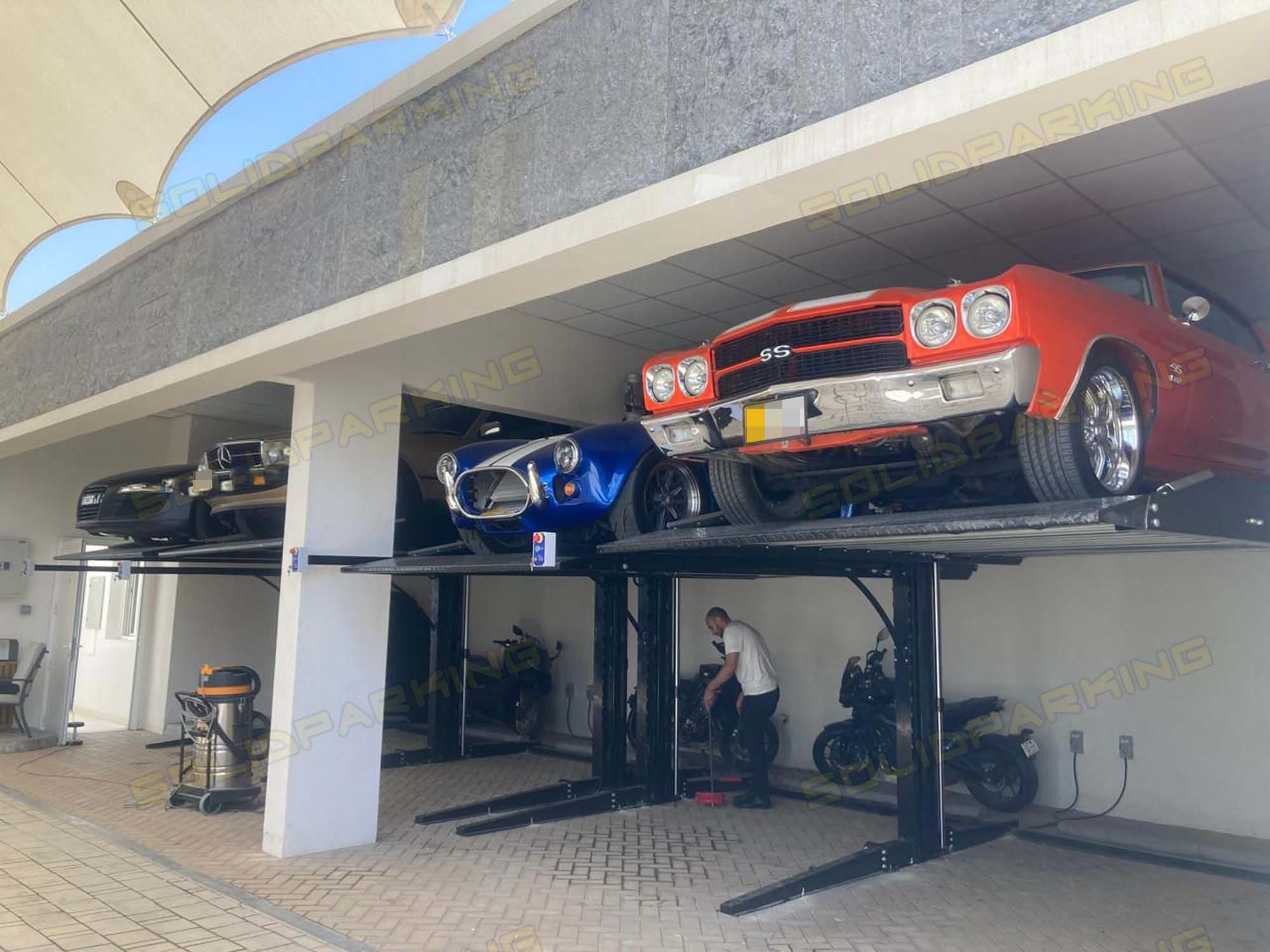
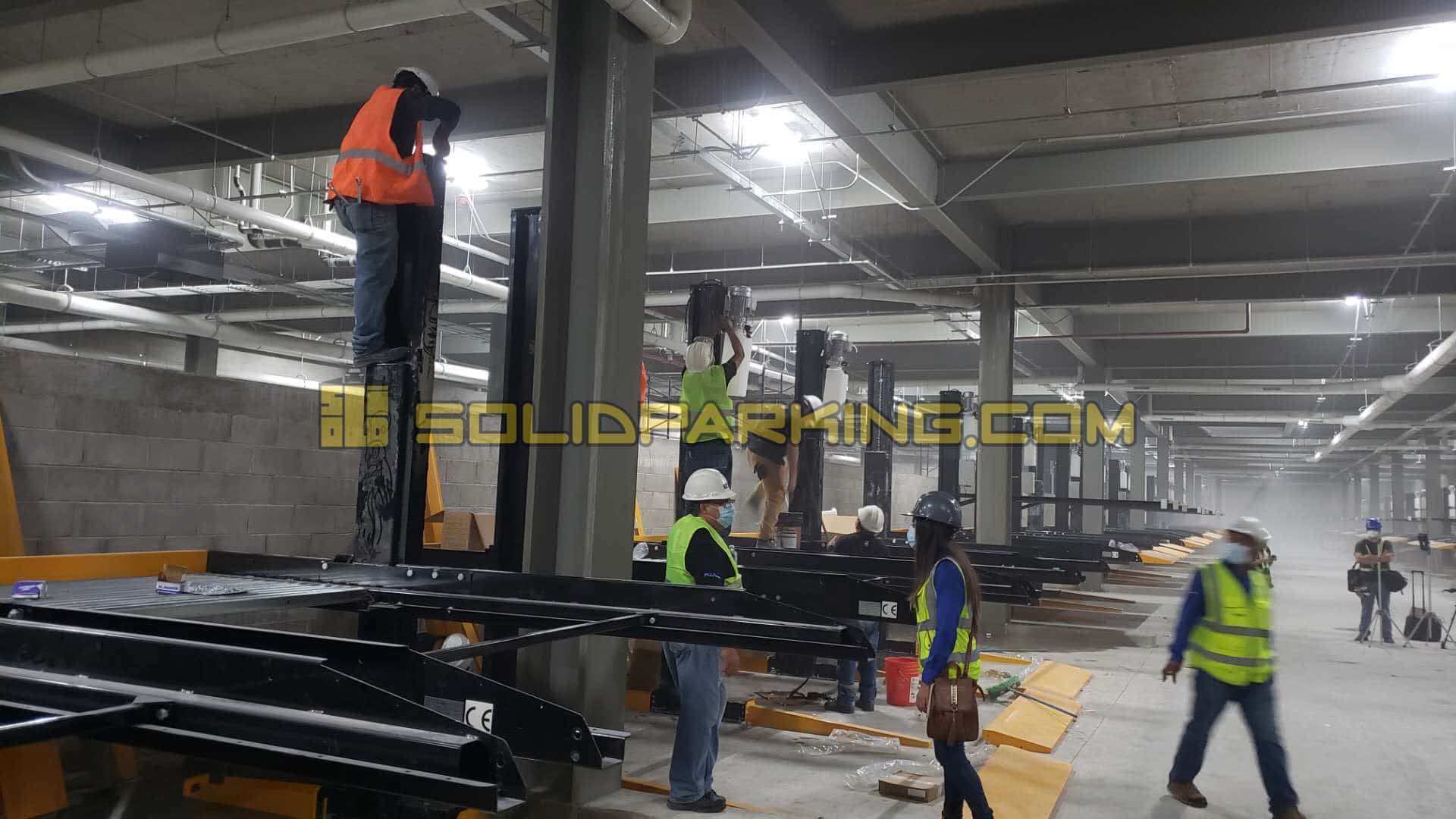
Understanding the distinctions between two-post and four-post car stackers becomes far more intuitive when seen in real-life context. The following gallery offers a glimpse into how these systems are integrated across diverse architectural and operational environments—transforming parking challenges into streamlined, efficient solutions.
Conclusion
Two-post and four-post car stackers each present unique advantages in addressing modern parking challenges. Two-post systems excel in compactness, cost efficiency, and ease of installation, fitting urban residential and valet applications. Four-post lifts provide superior load capacity, operational versatility, and enhanced user safety, aligning well with commercial, industrial, and service-oriented parking demands.
Architectural professionals should evaluate these technologies through the lenses of site constraints, user experience, maintenance capabilities, and financial models. Integrated thoughtfully, both stacker types contribute to sustainable, space-conscious urban mobility frameworks and deliver measurable economic benefits.