Stack Smarter, Not Wider: The Rise of the FP-630 Triple Car Lift in Urban Parking
Release time:2025-08-06
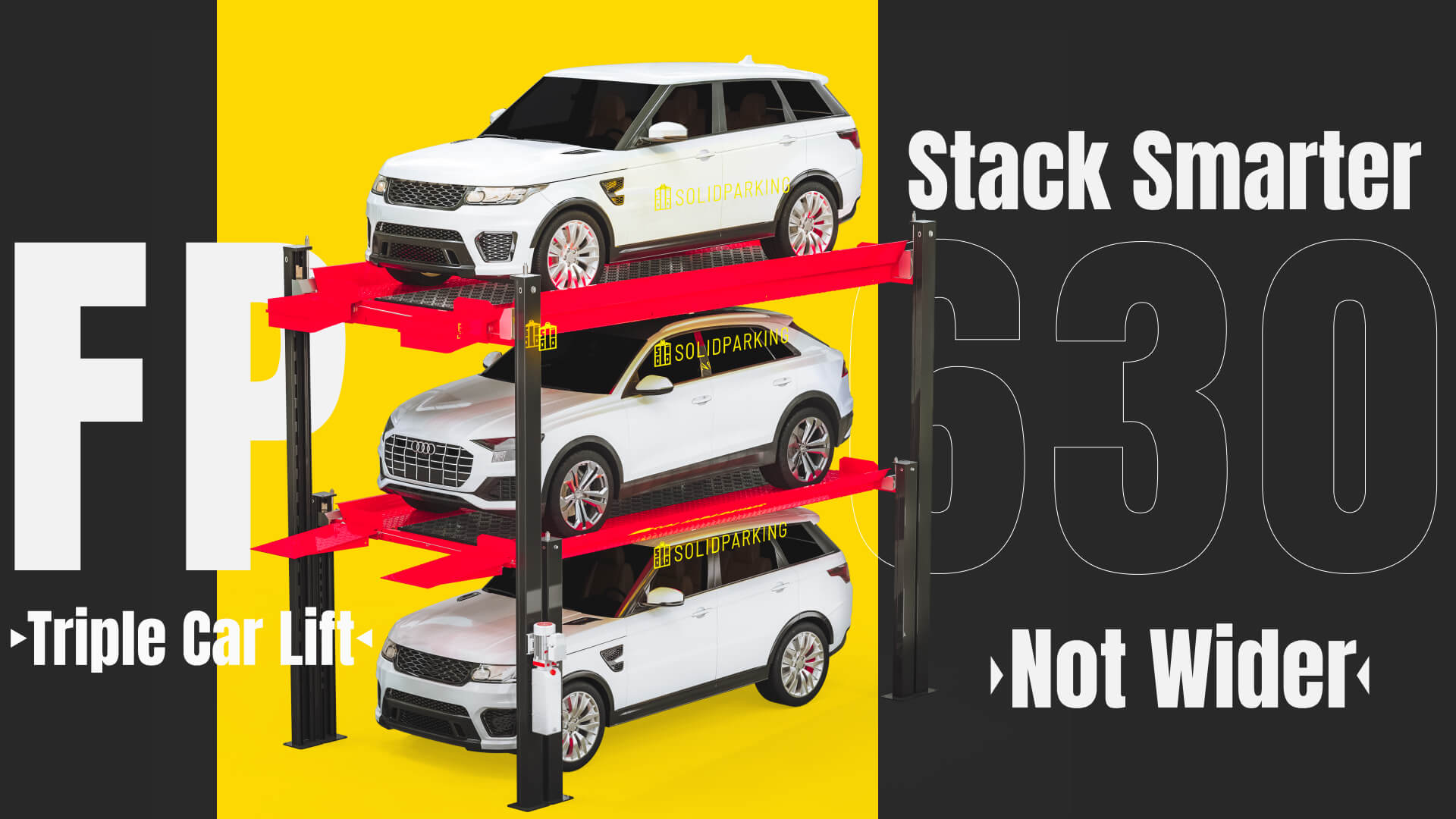
In dense cities where space is a premium and garages are shrinking, vehicle storage is no longer just a functional need — it’s becoming a design challenge. The FP-630, a vertical car lift that stores up to three vehicles in a single footprint, represents a solution shaped by both necessity and innovation.
It’s more than a machine. It’s a smart response to modern urban constraints.
A Compact Powerhouse
The FP-630 is a dual-platform car lift engineered for both storage and service. It combines a large and a small 4-post lift into one integrated yet modular system. Each lift operates independently, meaning you can use one to store vehicles long-term while the other handles regular maintenance. This separation makes it a versatile asset for homeowners, commercial garages, and car collectors alike.
Its structure is built to handle heavy-duty loads — from sedans to SUVs — with the lower platform supporting over 3.6 tons and the upper level handling just under 3 tons. The system is easy to install thanks to preassembled components and can be disassembled for relocation with minimal effort.
Space-Saving with Flexibility
Unlike conventional lifts that lock you into a single use case, this system is designed for multi-functionality. It’s an ideal fit for property owners who need to increase parking capacity without altering the building footprint.
In residential settings, it’s a garage extender. In dealerships, it doubles as both a display and service platform. And in dense urban developments, it enables vertical parking without the need for expensive automated systems.
This flexible usage model is what makes the FP-630 stand out in the growing family of multi-level car lifts.
Why Vertical Parking Is More Relevant Than Ever
Parking infrastructure is being rethought in cities worldwide. With rising vehicle ownership and land constraints, developers are under pressure to reduce parking ratios while still serving tenants’ needs. Traditional flat-lot solutions are giving way to vertical storage systems that do more with less.
Research in urban mobility has consistently shown that curbside congestion, garage overflow, and inefficient space allocation are contributing to real estate challenges in urban cores. In response, vertical car lifts have emerged not just as a garage upgrade but as a planning tool for modern architecture.
Market Trends Support the Shift
The global demand for lift-assisted parking is growing rapidly, particularly in cities like Los Angeles, Seoul, Berlin, and Shanghai. In North America, residential users are increasingly adopting vertical lift systems to store seasonal vehicles and maximize garage space. In Europe, strict emission zones are encouraging centralized vehicle storage where stacker lifts are preferred for their footprint efficiency. And in Asia, vertical solutions are essential for space-starved city blocks.
While fully automated robotic parking is gaining visibility, these systems come with higher infrastructure costs and maintenance needs. In contrast, the FP-630 offers a mechanical simplicity that reduces long-term complexity without sacrificing safety or storage performance.
The global vehicle lift market is growing at a steady CAGR of 6–7%, with revenues projected to increase from USD 1.6 billion (2023) to nearly USD 2.9 billion by 2032. According to DataIntelo (2024), major growth drivers include:
– Urbanization and space scarcity
– Automotive aftersales growth
– Rising vehicle ownership in developing regions
Regional Breakdown:
Region
% Share of Market
North America
34–35%
Asia-Pacific
~29%
Europe
~28%
These regions account for most new installations, with high adoption seen in Japan, China, Germany, and the U.S.
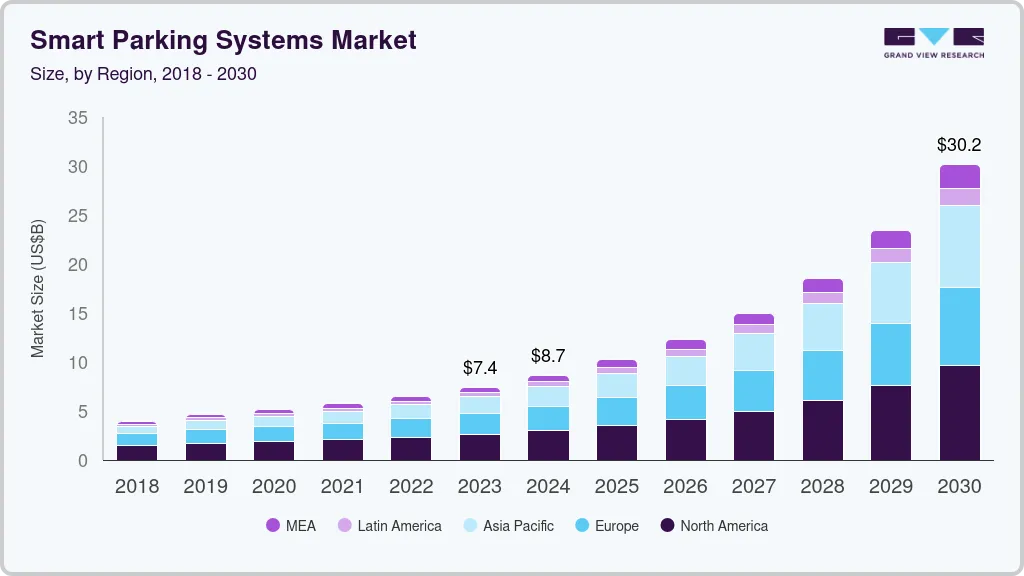
(Market Growth): Projected growth in the smart parking systems market from ~USD 6.5 billion in 2022 to over USD 30 billion by 2030 (CAGR ~22%)—reflecting increased adoption of off‑street automated parking systems globally
Academic and Empirical Research
Occupancy and Parking Behavior
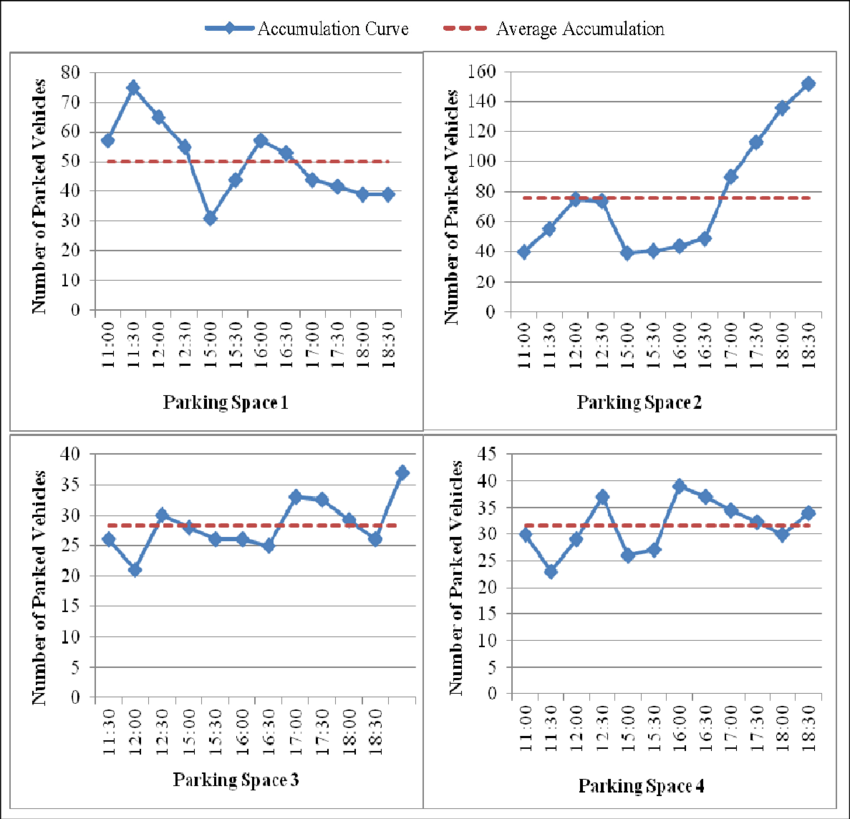
ResearchGate (2016) data on urban parking in Dhaka shows that car accumulation follows peak-hour trends. Vehicles often sit idle for long durations, suggesting stacker lifts can dramatically increase efficiency in static parking environments.
Parking Accumulation Curves): Variability in parked car volumes over a typical urban day in Dhaka; demonstrates non-uniform usage patterns and demand spikes during peak hours
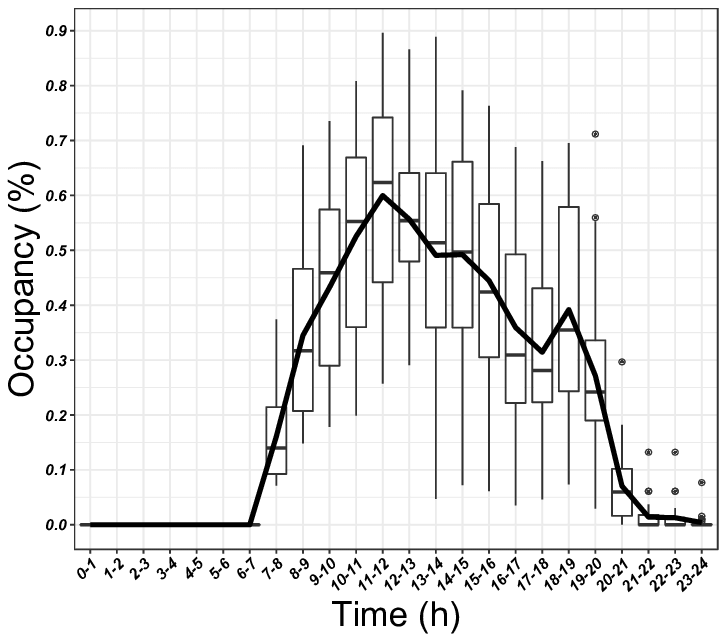
(Parking Occupancy Time Series): Hourly occupancy across 30 urban districts highlighting peak demand during midday and early evening—indicating persistent high utilization of parking assets throughout the day
Engineering for Safety and Longevity
The lift’s architecture includes multiple safety redundancies: hydraulic overload protection, limit switches, emergency stop functions, and mechanical lock positions along the height range. Each control system operates on a low-voltage line to reduce electrical hazards, and the entire system meets European CE safety standards.
What truly enhances its lifespan, however, is the finishing process. Using epoxy zinc-rich powder coating, the lift resists corrosion, chemical wear, and environmental damage even in exposed garages or coastal installations. These coatings are not just cosmetic; they’re critical to preserving structural integrity over decades of use.
Reliability & Implementation Issues
Real-world case studies in Australia and Japan show that some automated stacker systems, especially those installed in high-density apartments, can fail and leave vehicles inaccessible for weeks. This underlines the need for:
· Reliable hydraulics and electrical systems
· Manufacturer-backed service networks
· Fail-safe manual lock releases and override protocols
The FP-630’s manual safety lock pin, removable control, and 24V safe voltage system directly address these failure risks.
Performance Meets Practicality
From the user’s standpoint, the experience is seamless. The lift transitions between levels in under a minute, with smooth hydraulic motion and intuitive push-button control. Optional remote operation and customizable add-ons — like oil drip trays and tire guides — make the system even more adaptable to user needs.
Its modular design allows for future upgrades, and because it doesn’t rely on complex software, maintenance is straightforward and accessible to most licensed technicians.
Strategic Positioning
Strengths
Challenges
High capacity, vertical stacking
Requires professional installation
Modular, independent dual lifts
Complex maintenance over time
Proven market growth in key regions
Competes with fully automated stackers
Safe, CE-certified design
Still perceived as luxury by some buyers
Who Is It For?
This is a product built for people and businesses that value both space and time. Whether you’re a car enthusiast storing classic models, a property developer needing to maximize parking slots, or a workshop balancing storage with daily operations, this system scales to meet your needs.
It’s a solution that doesn’t ask you to compromise. It gives you more parking — not more problems.
Looking Forward
As cityscapes evolve and personal mobility continues to shape our infrastructure, vertical car lifts will become standard in both high-rise residential towers and suburban homes. The FP-630 is a clear step in that direction — merging industrial-strength engineering with real-world usability.
Rather than expanding out, we’re building up — and this lift is helping pave that path.